
Yes, I have been away from this blog for a long time. No, I am not going to talk about that.
I’ve been thinking a great deal about the connections (possible and otherwise) between various aspects of theoretical computer science, and reasoning in general and empirical science in particular. When I talk about “theoretical computer science”, I definitely do not mean applied problems such as the rendered graphics in an FPSRPG (and that shot most assuredly DID hit, you cheating bastards!) No, I mean the mathematical and logical puzzles associated with what it is possible to compute, in the absolute limit of possibility, and what (among that collection of puzzles) can be reasonably computed given the physical and temporal constraints of the universe.
Computability: What can or cannot be computed, period. For example, can you write a program that will test all other programs to see if they run. Absolutely not! Take the program itself, flip a few relations, and then feed that to itself and you will force it into an infinite loop that it cannot solve. Due to the logician Alonzo Church, this is known as the “Halting Problem.” One of the favorite ways of demonstrating a problem is unsolvable is by proving its solution would also solve the Halting Problem.
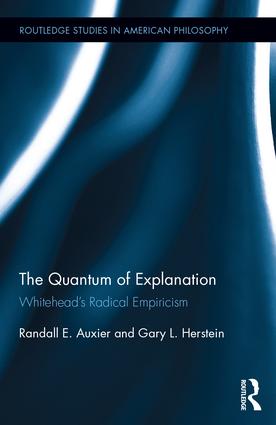


 THE QUANTUM of EXPLANATION