• About me (Gary L. Herstein, Ph.D.) / Contact form
  • Furious Vexation (general questions here)
  • Statement of Intent
  • With regard to Comments and Spam

THE QUANTUM of EXPLANATION

~ Science, logic, and ethics, from a Whiteheadian Pragmatist perspective (go figure)

THE QUANTUM of EXPLANATION

Category Archives: Logic

Slippery Slope

13 Thursday Oct 2016

Posted by Gary Herstein in Critical Thinking, fallacies, Inquiry, Logic

≈ Leave a comment

Tags

Critical Thinking, fallacies, Logic

The “slippery slope” is the fallacy (if it is a fallacy – some might dispute that!) that says certain actions cannot ever be taken because they lead to other actions, which make still other actions possible, etc., leading finally to some kind of catastrophic action which can no longer be denounced or argued against because of all the little steps that led up to it and gave it permission. It is a frequent traveler with those who would argue against any sort of incremental changes to social institutions or the guarantee of civil rights. Thus, we’ve seen a great deal of slippery slope “reasoning” amongst conservatives denouncing marriage equality, with such claims being floated as, “If gays are allowed to marry, what is to prevent people from marrying farm animals, or young children?” (I’ll not link to any such claims; if the rock you’ve been hiding under these past several years has kept you shielded from such nonsense, I will not be the one responsible for breaking your bubble.)slippery-slope

What inspired me to write about this now was my recollection of how this fallacy relates to the famous sorites paradox: Sorites: noun so·ri·tes \sə-ˈrī-(ˌ)tēz\ The paradox (if it is a paradox) rotates around the question of how trivial actions, too small to have any consequence of their own, nevertheless can sum up to be massive and absolute distinctions. So, in a sense, slippery slope is going down the hill, while sorites is going up it. Continue reading →

Natural Order

10 Monday Oct 2016

Posted by Gary Herstein in Aesthetics, Logic, naturalism, Personal History

≈ 1 Comment

Tags

Aesthetics, naturalism, Personal

I was looking at a picture that I had taken a few years back, of Thumb Butte, just outside of Prescott, Arizona, when the phrase “natural order” popped into my mind. What made this stand out (because words, phrases, and images are popping into my mind all of the time – it is like Tourette’s of the imagination) was the fact that it came to me flagged as ironic. What struck me as ironic, gazing with affection at one of my favorite places in the world, was how seriously disorderly nature really is. That’s what is so lovely about it – it shatters our boundaries with promiscuous abandon. And the only way we prevent such shattering is by murdering nature outright – which, of course, we are also working on with rather more energy and enthusiasm than we ought.thumb-butte-3-long-loop-006

The natural sciences look to distill, while the engineering and technical enterprises look to impose, order from and upon Nature. And there are certainly good and thoroughly ethical reasons for all of these valuable activities. We live longer, healthier lives (certainly on average) than we ever did in the past. Further, the quest for knowledge is, at least arguably, one of the most singularly noble pursuits available to our imaginations. But I’d like to say a little about the negatives, from my version of a Whiteheadian perspective. Now, I am not anti-science; when I’ve criticized contemporary disciplines (see below) it is for their abandonment of real science. Nor am I any manner of luddite; I am composing this missive on a computer, I intend to post it on the internet; I’ve a library that would be the envy of even the wealthiest individuals from a century ago on my Kindle; even as an introvert, I have connections to the outside world far beyond the imaginations of all but the luckiest persons from previous centuries. But there are costs, and we ought to acknowledge that there might be such a thing as “too much.” I began wondering, looking at that picture of Thumb Butte, if that too much might be related to our simplistic notions of “natural order.” Continue reading →

Internal/External

08 Saturday Oct 2016

Posted by Gary Herstein in Logic, Metaphysics, Process Philosophy, Relationalism, Whitehead

≈ 1 Comment

Tags

Process Philosophy, Relational thinking, Whitehead

A little while ago I rather casually glossed the idea of internal and external forms of relatedness – worse yet, I did so in the concept of discussing Whitehead’s philosophy. This seems like a good time to flesh those ideas out a bit more, as they are interesting in their own right, and will also serve to illuminate another respect in which Whitehead’s process metaphysics differs from so much of the Western canon.entrance-exit

I have been arguing in two previous posts (with a minor political interruption along the way) that what a “thing” “is”, is a matter of how that “thing” relates to the world, and that those relations have a reality in their own right over and above being a merely parasitic way of talking about things and other things. This is a bold claim. Along the way, I’ll be using the terms “relations” and “forms of relatedness” pretty much synonymously. This is nothing to get excited about, simply an effort on my part to mix up my language a bit so that it does not become tedious from repetition. Continue reading →

Ignore the pundits – Clinton owned the first part of last night’s debate too

27 Tuesday Sep 2016

Posted by Gary Herstein in Logic

≈ 1 Comment

(Reblogged from Scholars and Rogues)

Pundits are getting it wrong about last night’s debate – Clinton wasn’t on her heels for the first 20-30 minutes, she was making a pitch to Sanders supporters, progressives, her b…

Source: Ignore the pundits – Clinton owned the first part of last night’s debate too

Plenum

23 Friday Sep 2016

Posted by Gary Herstein in Logic, Metaphysics, Philosophy of Logic, Whitehead

≈ 3 Comments

Tags

Logic, Process Philosophy, Relational thinking, Whitehead

So my last round of musing was on the subject of “emptiness.” Connected to that idea is the concept of “fullness,” of “plenum.” I suspect that one of the primary failures of contemporary metaphysics is misunderstanding which is really which: that is to say, what is really full, and what is really empty. Here again, Whitehead’s process metaphysics offers us important insights. Because how we think of “fullness” – of a thing, a region of space, or whatever – is directly correlated to what we believe to be genuinely real. I argued earlier against the naïve concept of “empty” space, pointing out that not only is that space (according to physics) a broiling froth of micro events and virtual particles, but that it is also densely awash in relational connections to the rest of the universe. Adding to that earlier discussion, one could say that the space itself is a kind of “thing”: it is an event in its own right, it is a process of space relating itself to other spatial events. In this regard, Whitehead rejected the “material aether” that dominated astrophysical thought in the days between James Clerk Maxwell and Albert Einstein (the last quarter of the 19th C. to the first decade or two of the 20th), and argued instead for an “aether of events” as the dominating characteristic of space.plenum

Without assuming – indeed, explicitly denying – any absolute sense of either “emptiness” or “fullness,” what sorts of relative conditions might lead us to characterize one sort of collection as generally more full, and another as comparatively more empty? Well, for that we need a notion of what it is that fills, hence that which is not there when things are empty. My argument is that what “fills” are events and relations. Continue reading →

Emptiness

05 Monday Sep 2016

Posted by Gary Herstein in Inquiry, Logic, model-centrism, Philosophy of Science, Whitehead

≈ 4 Comments

Tags

Inquiry, Logic, Metaphysics, philosophy of science, Relational thinking, Whitehead

A recent interview on NPR, in their “Short Answers to Big Questions” segment, went to special extremes to demonstrate how monumentally bad science journalism is these days. My discussion here will come in two parts, one short, and one a great deal more detailed. The short part will be a quick debunking of supposedly scientific claims from a conventionally scientific standpoint. In particular, statements are made in this interview with absolute confidence that cannot possibly stand up to even the most basic grasp of physical science. The longer discussion will have to do with philosophical criticisms that run beyond most of contemporary science. This is because so much of that science has degenerated into pure model centrism, and consequently fails to ask any of the fundamental questions that need to be raised. The motivating idea behind all of this is the idea of “empty” space.Empty Bottle

The offending NPR piece opened with a question about how empty a volume of space would be were there only (say) three atoms or molecules within a volume of about one cubic meter. After a few moments discussion about the volume of molecules of air in a cubic meter at sea level (a discussion that appears to contain an unimportant typographical error), the discussion moves out into space, into deep, deep space. The conversation leads to the following (slightly edited) highly problematic exchange:

if there are points in space with only three atoms per square meter, what fills in the rest? The answer is nothing…

for a physicist, the absence of matter is nothing. I mean there is still space and time there, but you know, there – the absence of matter we consider to be a state of, you know, zero matter, zero energy density, is a way of putting it.

The problems here come at two levels, one of fairly ordinary physics and the other at a deeper philosophical level. I’ll deal with both in turn. Continue reading →

Publication Announcement

02 Friday Sep 2016

Posted by Gary Herstein in Logic, Philosophy of Logic, Philosophy of Science, Process Theology, Whitehead

≈ 2 Comments

Tags

Logic, philosophy of science, Process Theology, Whitehead

Routledge has now offered a contract, so I can make official the anticipated publication of the book for which this blog is named:

Quantum

Continue reading →

Intuition in Mathematics and Physics: A Whiteheadian Approach

05 Friday Aug 2016

Posted by Gary Herstein in 2015 International Whitehead Conference, General Philosophy, Inquiry, Logic, Mathematics, naturalism, Philosophy of Science, Public Philosophy, Whitehead

≈ Leave a comment

Tags

2015 International Conference, Inquiry, mathematics, naturalism, philosophy of science, Whitehead

This is just a quick shout-out to my friend and colleague, Ronny Desmet, for putting together the papers that were presented at the 2015 International Whitehead conference in the new book, Intuition in Mathematics and Physics: A Whiteheadian Approach, in which yours truly is a contributor. Intuition Mathematics

The articles within are from Section IV, Track 2 of the conference. The table of contents is not yet available at Amazon, so the contributions are as follows:

  1. Integral Philosophy – An Essay on Speculative Philosophy – Ronald Preston Phipps
  2. Reflection on Intuition, Physics, and Speculative Philosophy – Timothy E. Eastman
  3. Whitehead on Intuition – Implications for Science and Civilization – Farzad Mahootian
  4. Whitehead’s Notion of Intuitive Recognition – Ronny Desmet
  5. The Beauty of the Two-Color Sphere Problem – Ronny Desmet
  6. The Complementary Faces of Mathematical Beauty – Jean Paul van Bendegam and Ronny Desmet
  7. Creating a New Mathematics – Aran Gare
  8. Whitehead, Intuition, and Radical Empiricism – Gary Herstein
  9. What Does a Particle Know? Information and Entaglement – Robert J. Valenza
  10. A Neurobiological Basis of Intuition – Jesse Bettinger

Arrow’s Paradox of Voting

26 Tuesday Jul 2016

Posted by Gary Herstein in Critical Thinking, Fascism, Logic, Politics

≈ 1 Comment

Tags

Authoritarians, Critical Thinking, Logic, Politics

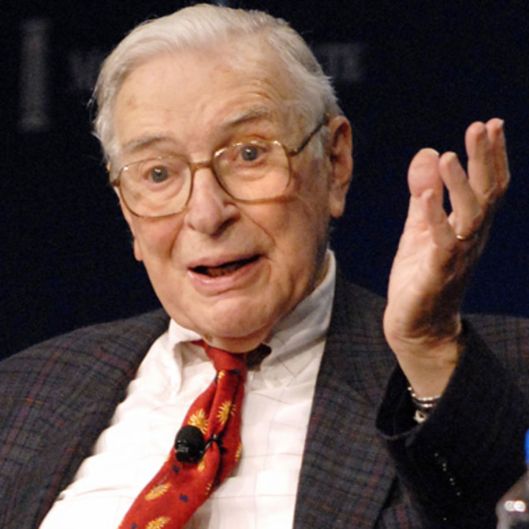
Kenneth Arrow is a well known economist, logician, statistician, and political theorist. While his scholarly contributions are numerous, his best known was his first, published as a part of his dissertation. This is the above titled “paradox of voting,” which is also referred to has his “impossibility theorem.” This latter is evidently the technically correct title. However, I learned about it as the paradox of voting, and that’s the title I’ll stick with here. For one thing, calling it his “paradox of voting” makes it more clear at the outset what the theorem is about, and suggests what is really at stake. Details of the impossibility theorem are readily found for no more effort than looking, so my intention here is to provide a non-technical gloss of the topic. Still, enough of what I say here is about basic logic (and not merely political screed) that I am satisfied that this topic falls within my basic parameters for this blog.

Kenneth Arrow

Kenneth Arrow

The stakes here could scarcely be any higher, as they effect the very foundation of our nominally democratic system. Because of how our voting and electoral system is set up, we have a “winner take all” format that can (and often enough, does) allow a person to be elected even thought that person did not receive a majority of the votes. Once you have more than two candidates (or more than two parties) involved in any particular election, it is no longer possible to representatively distribute preferences in the election. This is the somewhat fancy way of saying things. The simpler way of saying it is that the more widely detested candidate can win. Continue reading →

The Qualities of Quantities

20 Wednesday Jul 2016

Posted by Gary Herstein in argument, Critical Thinking, Inquiry, Logic

≈ Leave a comment

Tags

Critical Thinking, Inquiry, Logic

An oddity about philosophers, and especially logicians, is that when they talk about “quantity” they are not talking about numbers, or numerical counts. Rather, they are talking about the ways things can be gathered together (or singled out) using words like “all” or “some.” These ideas are called “quantifiers.” I want to do three things (briefly, as always) here: say a little about the “basic” quantifiers (“all” and “some”), say a little about how they get dropped from common discourse and argument – whether from laziness or deliberate obfuscation – leading to much gratuitous confusion. Finally, I want to say something about quantifiers that typically do not make it onto philosophers’ or logicians’ lists, yet are at least as common in ordinary discourse and argument as the “principal” two are. My purpose here (as always) is not to lead you onto the path of righteous proof making, but simply alert the reader to the importance of these operators so that they might not slip by quite so stealthily in the future.abacus_logo1

The second greatest sin in logic is to allow things to pass implicitly; the greatest sin is to block the road of inquiry, which is one of the things that happens when concepts are allowed to pass implicitly. Allowing things to remain implicit means that vague statements are permitted, by innuendo, to become concrete, thus leading us astray (blocking inquiry) from the directly stated vagueness. Sometimes things really are ambiguous, and they must be allowed to stay that way until real data, rather than jumping at conclusions, enables us to clear up the ambiguity. That, or recognize that the ambiguity is not – or, at least, not yet – cleared. Continue reading →

← Older posts
Newer posts →
Follow THE QUANTUM of EXPLANATION on WordPress.com

Enter your email address to follow this blog and receive notifications of new posts by email.

Blogs I Follow

  • Homotopy Type Theory
  • The Shanarchist Cookbook
  • Cote du Golfe School of Fencing
  • Professor Watchlist redux
  • Free Range Philosophers
  • thenonsequitur.com
Whitehead, Alfred North

Copyright Announcement

© Dr. Gary L. Herstein and garyherstein.com, 2014 -- 2024. Unauthorized use and/or duplication of this material without express and written permission from this site’s author and/or owner is strictly prohibited. Excerpts and links may be used, provided that full and clear credit is given to Dr. Gary L. Herstein and garyherstein.com with appropriate and specific direction to the original content. (In other words, share but acknowledge.)

← Back

Thank you for your response. ✨

“But in the real world it is more important that a proposition be interesting than that it be true. The importance of truth is, that it adds to interest.” – Alfred North Whitehead, Process and Reality

Archives

Spam Blocked

71,382 spam blocked by Akismet

Blog at WordPress.com.

Homotopy Type Theory

The Shanarchist Cookbook

Cooking up food for thought & Shanarchy. I am a Philosopher, writer, meditation & mindfulness teacher, & artist.

Cote du Golfe School of Fencing

Fencing / Sword Classes & Lessons Naples, Bonita, Estero, Florida

Professor Watchlist redux

Free Range Philosophers

Loving Wisdom Beyond the Academy

thenonsequitur.com

  • Subscribe Subscribed
    • THE QUANTUM of EXPLANATION
    • Join 123 other subscribers
    • Already have a WordPress.com account? Log in now.
    • THE QUANTUM of EXPLANATION
    • Subscribe Subscribed
    • Sign up
    • Log in
    • Report this content
    • View site in Reader
    • Manage subscriptions
    • Collapse this bar
 

Loading Comments...