Model-Centrism 1: A Scientific Controversy

Tags

, ,

It is a capital mistake to theorize before you have all the evidence. It biases the judgment.

– Sherlock Holmes, A Study in Scarlet

There are scientific disciplines out there that are in a state of fundamental crisis. But unless you’ve a moderate degree of expertise in those fields, it is unlikely you know about such crises. I want to examine one such crisis here, and touch on its relation to a way of approaching the world that I’ve taken to calling “model-centrism.”

BrokenThe Holmesian dicta quoted above is hideously simplistic (one must already have significant theoretical commitments in play before any evidence can make its appearance AS evidence. To decline to theorize entirely would not make one open to the facts and evidence, it would make one completely incapable of recognizing anything as a fact or as evidence.) Nevertheless, it touches upon an important issue with model-centrism, and model-centric thinking, namely the impatience for gathering data that leads some people to favor abstract theories without any regard for how such theories might be tested or validated.

Continue reading

The Nature of Scientific Controversies

Tags

, , ,

The title of this post is, among other things, a play on Kuhn’s classic The Structure of Scientific Revolutions. The purpose of this post is to set out a collection of “quick and dirty” rules of thumb for non-specialists to be able to determine when a putative “controversy” (as reported in the press) is a genuine scientific controversy. DSCF1966Quick and dirty rules of thumb are the best that anyone can ever hope to achieve on this matter, because the determination of genuine versus specious controversy is inherently qualitative and deeply sensitive to context. Nevertheless, a very solid set of evaluative tools can be quickly assembled and mastered with relative ease by anyone prepared to apply logic to facts. This post is something of a “part 2” to my earlier, What is Science?

Continue reading

Not Safe, Merely Sorry

Tags

, ,

And now for a brief bit on applied critical thinking …

Dunce

Logical reasoning and critical thinking are habits. And like all habits, they can be cultivated and nurtured through various forms of positive reinforcement, or they can be suppressed and even eliminated with sufficient amounts of negative reinforcement. So there is never a good time to abandon rational thought on the excuse that, just in case, this one time, it might be wrong. Error is the risk we take when we attempt to say what is true. Error is the guarantee we ensure when we give up on that attempt – ironic, since the excuse for giving up is to avoid error. I bring this up, because the excuse is often presented by persons insistently advancing some demonstrable piece of nonsense that, “It is better to be safe than sorry.” Which is to say, some abjectly ridiculous claim is asserted with the statement that, “I don’t know if this is true or not, but blah blah blah blah.”

As a matter of fact, No, it is not better.

Continue reading

The “G” Word

Tags

, , ,

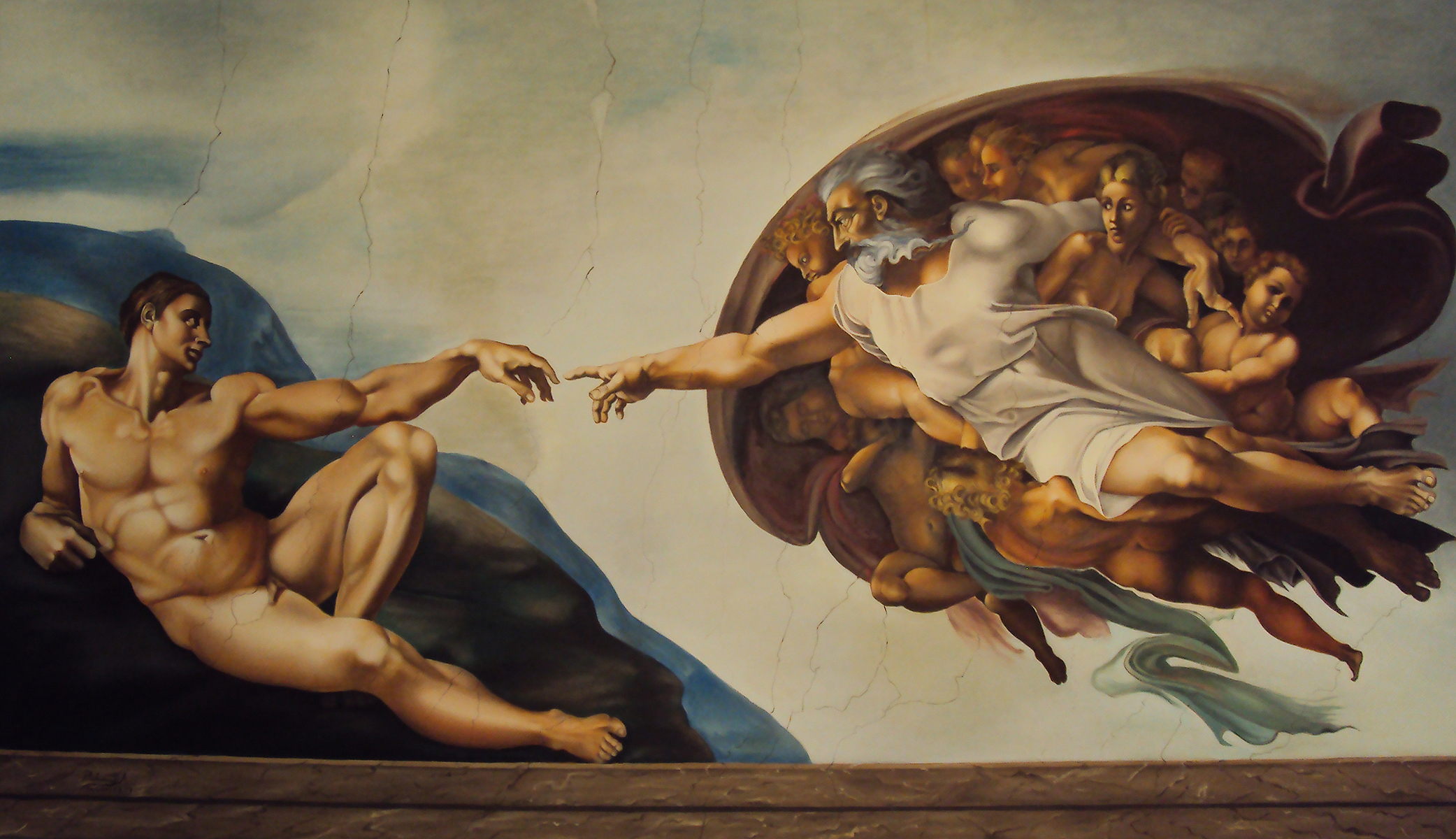
Philosophers need not be physically courageous (such as soldiers, police officers, or fire fighters), but they should be morally brave. So permit me to swallow my trepidation and make an initial offering about the much vexed “G” word – that is, “God.”

God and man

There is actually quite a great deal of very good stuff out there in the world on the subject; sadly, little of it ever rises to the surface of popular consciousness. But let’s start by considering some of the more grotesquely fatuous twaddle that is out there, so that we can end an a relatively high note.

Continue reading

Season’s Greedings

Tags

,

Americans have long exercised a vexed relationship with the Christmas season; and I say “Americans” here, because the vexation has long preceded the existence of the “United States.” If one takes seriously the tales told in the Gospels, then the Winter Solstice bears no possible connection to the birth date of Jesus. The stories very clearly state that shepherds were minding their flocks in the hills when the Star appeared. But shepherds would never permit their flocks to wander about the hills in the late days of Autumn, early days of Winter. So by irrefutable Biblical evidence, we know that Christ’s birth would never occur at “Christmas” time.

Continue reading

Tortured Logic

Tags

, ,

So, the Senate’s report on torture has come out. Former Vice President Dick Cheney, as singularly despicable a human being as has ever crawled out from under a rock, assures us that this program was approved at the highest levels. Is a crime a crime if Important People decide not to call it such? For example, the excuse given by one active participant in the CIA’s blatant torture of prisoners (conducted without regard for the prisoners’ guilt or innocence – to say nothing of basic human decency – and the repeatedly demonstrated FACT that such methods never produce reliable information; more on this momentarily) was that three out of four past Attorneys General of the United States had approved of the practices. Iron Maiden

As Jon Stewart points out in the previous link, the three were all Attorneys General appointed by the Bush administration, which administered the programs of torture as a matter of policy orchestrated at the highest level. Stewart’s approach – via satire and such humor as one may bring to bear in the face of our public complicity in crimes against humanity – to the contrary not withstanding, his argument nevertheless bears appreciation. Continue reading

Until It Bleeds – Until It Burns

Tags

, , ,

The predictable, self-righteous clucking by privileged White commentators of various stripes that followed especially upon the Ferguson rioting (which followed upon a grand jury result that shows every sign of having been aggressively manipulated so as to avoid, even preclude, any indictment of the White cop who killed an unarmed Black teenager) betrays a level of willful obtuseness that is truly beyond all measure. Add to this now the similar refusal to indict in the Garner case in Staten Island, and the shock and outrage in minority communities has reached levels not seen since the 1960’s. This rage continues to leave many people – almost entirely White people, and regardless, almost certainly members of some significantly privileged collection of people – completely dumb-founded as to the reason why this rage is fulminating in so many minority communities, a rage that often expresses itself blindly in violence. Why are black people, especially, so angry? Why do they lash out so violently at their own communities? These respective cases went before their grand juries, and when presented with all of the evidence, the grand juries said that there was not evidence enough for an indictment. Isn’t this how the system is supposed to work?

Bloody_X_Acto_Knife5_by_Wrotne

But that, of course, is precisely the problem: that IS how the system is supposed to work. The system IS supposed to dismiss the value of minority, especially black, lives. Because the system that we live in is one of monstrously institutionalized racism in which black people can be safely viewed as not even human by people who insist that this is not a problem. Yes, the system “worked.” Such “working” is the moral catastrophe of our age.

I wish to make two points here, the first is quite patently clear, while the second and longer point will be far more problematically speculative. Point #1 is that, while rioting – which is not at all the same as civil disobedience – is almost certainly not helpful, it is understandable. The second, far more speculative, point is an approach toward such an understanding that I’ve not seen suggested elsewhere.

Continue reading

What is a Fallacy?

Tags

There are many more ways of reasoning poorly than there are of reasoning well, just as there are vastly more ways of getting lost than there are of proceeding directly to your destination. (A quick note on that last analogy: not every circuitous path is a mistake; depending on time and tide, sometimes there are aesthetic values other than efficiency of travel and timeliness of arrival at play in an actual journey.) Even the most detailed catalog of fallacies must content itself with providing little more than a generic list.Doh My favorites such list is The Fallacy Files; besides their basic list, the Files also provides a well worked out taxonomy. But what is a fallacy? I can give a list of bird species without ever saying what a bird is. The Files do offer an answer to this question, but I wish to propose a slightly different approach. Where I am going is definitely outside the mainstream when it comes to saying what a fallacy is, but I believe a substantive argument can be made for the case I present here.

Continue reading

HERSTEIN’s FIRST LAW

Tags

, , ,

Never underestimate human capacity for denial.

I first formulated the above phrase – and flattered myself by naming it – some decades ago; so long, indeed, that I’ve no clear idea when I first said it. Other people have probably said similar things, long before I ever first quipped the idea. But my first contact with the phrase was in my personal act of formulating it. The second person to invent the wheel still invented it if she didn’t know about the first person. The earliest example of the exact quote (it is important that you search on the quote, otherwise the search registers all the words, regardless of their order) that I can find on Google brings up the pseudonym of “Logic Deferred” as first stating the phrase publicly back in February of 2010. Feel free to click on the pseudonym to see who it is that comes up. But as I said, I’ve used the phrase for many decades now.

DerpAnd I am quite sincere about this statement: Never underestimate human capacity for denial. Smart people can be the worst cases when it comes to denial, because rather than using their intelligence for inquiry, they will use it to justify their ideology.

Continue reading

Black Devils

Tags

, ,

“And then after he did that, he looked up at me and had the most intense aggressive face. The only way I can describe it, it looks like a demon, that’s how angry he looked.” This is how Officer Darren Wilson described Michael Brown in the moments before Wilson killed the unarmed Brown. According to Wilson, Brown wasn’t angry, infuriated or even enraged – because for Wilson, Brown wasn’t even human. Notice that Brown’s face isn’t even his (Brown’s) face; Wilson calls Brown’s face an “it.” (Found on pp’s 224 — 225 of Wilson’s testimony.) Brown was a demon, he was a black devil. And because Brown was a black devil, it required nothing more than Wilson feeling he was threatened for the threat to have the legal standing of an objective fact. rabid-dogs

Continue reading