
• About me (Gary L. Herstein, Ph.D.) / Contact form
  • Furious Vexation (general questions here)
  • Statement of Intent
  • With regard to Comments and Spam

THE QUANTUM of EXPLANATION

~ Science, logic, and ethics, from a Whiteheadian Pragmatist perspective (go figure)

THE QUANTUM of EXPLANATION

Category Archives: Logic

Models and Interpretations

18 Saturday Jun 2016

Posted by Gary Herstein in Critical Thinking, General Philosophy, Logic, Religion

≈ 2 Comments

Tags

Critical Thinking, General Philosophy, Logic, Religion, Science

A number of years ago I got into a discussion with an acquaintance about what kind of symbol system tells us “the truth” about the world. This is not how my interlocutor expressed the problem; she simply insisted that mathematics gives us the truth. I tried many different approaches to get her to understand that what she was saying made absolutely no sense, because the first thing that must happen (once any collection of symbols is at hand) in order to talk about truth was that those symbols have to be interpreted, and such interpretation is not given in advance. Thus, I have a modest background in some advanced forms of mathematics (mainly formal logic, abstract algebra, and a touch of differential geometry), and I understand that simply having a bunch of squiggles in front of you is not enough to adjudicate whether those squiggles say anything at all, much less anything that is true. Meanings must be assigned to those squiggles such that they hang together to form some kind of model, and that model then must be associated with the world in some form such that the model can be interpreted as making claims about the world which then can be interpreted as to its truth content. And here, “world” can mean either the world of concrete experience or a purely abstract “world” which is itself something of a mathematical construct. Also, my choice of the term “truth content” rather than “truth value” is not an innocent one: I wish to leave open the possibility that truth evaluations can be more complex and multi-dimensional than the mere assignment of values.Three Mesas

It became very clear that while I understood my acquaintance’s position, she in no way understood mine. This was because while I was repeatedly able to paraphrase – that is, interpret – her argument, when asked to do the same for mine she was unable to do anything other than repeat her own position, which addressed none of the points I had made. In later years, she was known to crow a bit about how she “won” the argument. To be fair, in retrospect I realize that there were a number of ways I could have made my own position clearer, as it was burdened by a much greater degree of philosophical nuance than the position she was presenting. And I confess that I do not think quickly on my feet; indeed, I’ve only ever suggested that, given time, I can think thoroughly. (One of the reasons I went into philosophy is because a line like, “Herstein! If we don’t get this metaphysical principle out the door by end of business today, our competition is going to crucify us!” is not something one is ever likely to hear from one’s department head.) Continue reading →
Luck is Not a Method; Hope is Not a Plan

25 Monday Apr 2016

Posted by Gary Herstein in Critical Thinking, Inquiry, Logic

≈ 4 Comments

Tags

Critical Thinking, Habit, Inquiry

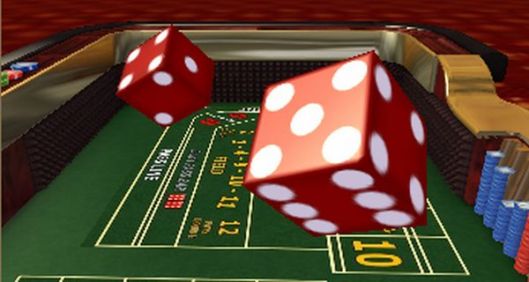
Having taught a variety of philosophy courses in my less than traditional career, one of the ideas I am most committed to conveying to my students is that it is not good enough – not by a long shot – to simply be “right.” Quite the contrary: it is better to be mistaken for good reasons than to be “right” by accident. After all, even a broken clock is “right” twice a day, but that doesn’t make it a reliable timepiece. It takes a real commitment to inquiry and logic to be mistaken based on genuinely substantive reasons. And the most important difference is, of course, that if you are mistaken, but on the grounds of solid reasons, then that mistake can be rectified by finding and correcting the mistake in those reasons. Because if you are mistaken on the grounds of good reasons, then it is necessarily the case that the mistake is somewhere in those reasons.craps2

This can be a tricky notion for younger persons to accept. (It is an especially tricky notion for narcissistic sociopaths of any age to accept. Consider, for example, Donald Trump … ) The notion that “being right” is the only thing that counts, regardless of how one achieves that particular form of “right”, is arguably a driving factor behind a great deal of plagiarism. But conclusions that are achieved in fashions that are not methodologically sound are not “conclusions” of any kind, they are dogmatically asserted bullet-points, as cognitively vacuous as mere barnyard noises. Not only do such things fail to advance inquiry, they actively impede inquiry. Continue reading →

Games People Play

05 Tuesday Apr 2016

Posted by Gary Herstein in Logic, Philosophy of Logic, Philosophy of Science

≈ 3 Comments

Tags

Logic, Philosophy of Logic, philosophy of science

So, what is it that makes something true? (Trust me, this ties in with this post’s title.) If I say that “X is the case,” and it, indeed, turns out that X IS the case, then my saying so was true. Or, rather, the thing I said was true, and my saying it was said truly. (Actually, my saying it was said truly, because I truly said it, regardless of whether what I said was actually true.) But what establishes the connection(s) between my saying it is the case, and its actually being the case? Well, presumably it is reality that makes that establishment; but how is that reality, how is that establishment, established in experience such that the truth-saying and the truth-being converge in a truth making?Chess

Because even as (and insofar) as “the truth is out there,” our having, getting, finding, or whatever, that truth involves a substantial amount of making. If you take the idea of truth seriously, then you must take seriously the fact that we have to go out and make that truth apparent through significant and substantive inquiry. Where this is going (and it will go fast) is that the maker that connects the truth as said with the truth as found, looks a lot like a successful “strategy” in a “game.” This is a formal, logical concept, which brings scientific inquiry into a dirty-dance with that part of formal logic known as model-theory. (Somewhere, somebody has sheet music on this stuff … ) Continue reading →

Sending the “Wrong Message”

29 Tuesday Mar 2016

Posted by Gary Herstein in Critical Thinking, General Philosophy, Humor, Logic

≈ 5 Comments

Tags

Critical Thinking, General Philosophy

One of the most singularly asinine claims that might be floated in any discussion is the one that follows the pattern that, “doing X will send the wrong message.” Characterizing such infantile twaddle as “asinine” is almost certainly an offense to all those statements in the world that are genuinely (but only) asinine. What makes such statements so unqualifiedly despicable is that they are all built around the fatuous presupposition that any act or statement is so unambiguously closed in its meaning that it can only send one, equally closed and unambiguous, message. Such childishness is of a piece with those who claim to take the Bible (or any other text) “literally,” as though the “literal” interpretation of any text were even possible in the abstract, much less actualizable in the concrete. I’ll have a few words to say on this latter topic at the end.404-error-page-not-found

What brought this to mind was a brief news story on the radio this AM, that mentioned how the Illinois legislative branch was considering a measure to decriminalize (note: NOT legalize, because that would generate huge amounts of revenue for the state, and we can’t allow that to happen … ) possession of small amounts of marijuana (I forget how much exactly). In addition, the bill would specify how much THC one could have in one’s system to be considered legally impaired for driving. Several law enforcement and “concerned citizens” groups oppose such actions on the grounds that it would “send the wrong message” to our delicate and oh-so-easily influenced youth. Well, as soon as the “wrong message” meme surfaces, you know the persons throwing this claim about are either stupid, lying, or both. So let us look at stupid first, lying second, and finish (as promised) with “textual literalism.” Continue reading →

Un-Cut

27 Sunday Mar 2016

Posted by Gary Herstein in Logic, Mereology, Ontology

≈ 3 Comments

Tags

Critical Thinking, Logic, Ontology

I was reminded again this other day that the varieties of ways that things can be “together” easily exceed the kinds of ways that even smart people will often notice or imagine are possible. The issue I have in mind here is not a matter of relationship advice but rather of logic (although more than a few relationships would profit from even a smattering of basic reasoning.) In this instance, some things can be analyzed into genuine parts that can be separated in fact, while other things can only be analyzed into abstract “parts,” which are not ever separable in reality; there is yet a third type that can only be taken as a whole, even in analysis, without doing violence to the nature and meaning of the thing in question. Failure to recognize what type of thing or idea one is dealing with can lead one into fundamental errors which, while often terribly clever are, for all of that, still just flat wrong. My interest here will be with the first two of the above three.Scissors

Various common phrases are easily recognizable in this context, most especially the old saw about, “the whole is greater than the sum of its parts.” This is especially true of organic unities. For while we’ve achieved a level of surgical finesse that can, under extremely delicate and rigorously right sets of circumstances, permit us to, say, remove an organ from a living being and replace it with another, this generally cannot occur without considerable trauma, frequent enough failures, and extraordinary skill to reassemble the whole that has been torn apart by the procedure. Such holistic entities are what the Greeks referred to as a-tomos, a word that roughly translates as “uncut.” It is from this Greek root that we get our term “atom,” which originally meant an undivided unity. Continue reading →

Time (“Chunky style”)

14 Monday Mar 2016

Posted by Gary Herstein in Logic, Philosophy of Logic, Whitehead

≈ Leave a comment

Tags

Logic, Time, Whitehead

Regardless of what Mick said, it is not on your side.

I’ve been in the position to observe a number of significant transitions of late – from which there will be no coming back – and the thought of time is once again on my mind. Saint Augustine – a fairly bright fellow, for a psychotic authoritarian – mused in his Confessions something to the effect (I quote from memory, so this is only analogously correct) that, “As long as no one asks me, I know what time is; as soon as anyone asks, I have no idea.”Hourglass

Time is something like THE fundamental mystery. “Intention” is right up there with it, except that intention is a logical/semantical category, whereas time is more about ontology – what genuinely IS (ontology), rather than what must be taken into account for the rational possibility of inquiry and discourse (logic/semantics). Moreover, it is not clear that intentionality (which includes things like “meaning,” “believing,” “interpreting,” “intending,” “wanting,” and so on) has any logical – much less ontological – possibility, that is not already thoroughly infused with time and temporality. Certainly this seems true in the human world; perhaps gods, devils, and their associated helpmates suffer no such limitations. I should add here that persons involved with phenomenological philosophy would require 200 pages of densely packed and, often enough, uninterpretable obfuscation and hand-wringing to ask the above question; but I am not a phenomenologist, and as such I labor under no such constraints. Continue reading →

Halfway Around The World.

16 Tuesday Feb 2016

Posted by Gary Herstein in Critical Thinking, Logic, model-centrism, Philosophy of Science

≈ 6 Comments

Tags

Critical Thinking, Logic, model-centrism, philosophy of science

“A lie can travel halfway around the world before the truth can get its boots on.” This well known saying is variously and unreliably attributed to a number of persons, from Mark Twain to Winston Churchill. But as long as one is not trying to steal the words for one’s self, it is less important who said a true thing, than that the thing said be true. Credit should be given, of course, when credit is due, and identifiable. But just because, say, Abraham Lincoln said a thing, that thing is not automatically true, any more than if Richard Nixon said something, it is automatically false. Now, it is not an ad hominem to call a liar a liar, nor is it a fallacy to question the credibility of a person whose credibility has been shredded by repeated abuses of the truth. Still, one must be very careful when it comes to either accepting or dismissing a statement merely on account of its source. If you dismiss an alcoholic’s statement that drinking is bad for you, on account of the fact that the person making the statement is an alcoholic (who is still drinking), you’ve committed the tu quoque version of the argumentum ad hominem. If anything, the alcoholic is better situated to speak with genuine expertise on the damage of alcoholism than, say, a more sober member of society.

Muddy Hiking Boots

But to return to our original point, there is an intransigence to falsehoods that is not easily dislodged by anything so inconsequential as reason and truth. There are many psychological studies (I’ll not link to any – they are easy to find) that point out that, for example, climate change denialism – devoid as it is of any shred of valid or scientific justification – nevertheless becomes more stubborn when it is confronted with logic and facts that admit of no rational dispute. The lie, as it were, digs in its boots. I’ll skip over any discussion of those rhetorical techniques that do seem to work, because such methods are not my interest here and it pisses me off that I’d ever have to resort to them. Rather, I want to look at those factors that let the lie out of the starting gate before the truth even knows that there is a race today. In particular, what is it that makes the lie so easy, and the truth so hard? Continue reading →

“Teach” the “Controversy”

28 Thursday Jan 2016

Posted by Gary Herstein in Critical Thinking, Inquiry, Logic, scientific controversy

≈ 7 Comments

Tags

Critical Thinking, Inquiry, scientific controversy, Teach The Controversy

I’ve written on the subject of scientific controversies several times in the past, and have even highlighted this particularly disgusting piece of nonsense (“teach the controversy”) more than once. But state legislatures are coming back into session, and already the push for ideology over inquiry is becoming manifest. Because right-wing ideologues devoid of any particle of intelligence or integrity insist on pushing this piece of manipulative idiocy, I am going to stand here in my little corner of the world and push back.Stooges-as-Scholars

I find the rhetoric behind this phrase especially monstrous. This is because the people who produce this nonsense have no interest in teaching, only in indoctrination; no grasp of controversy, only of ex cathedra declarations; no capacity for inquiry, only for the regurgitation of tediously fatuous twaddle. So let us explore for a moment what it is about this particular meme, “teach the controversy,” that is so singularly despicable. Continue reading →

The Quantum of Explanation

09 Saturday Jan 2016

Posted by Gary Herstein in Logic, Metaphysics, Philosophy of Logic, Whitehead

≈ Leave a comment

Tags

Logic, Metaphysics, Philosophy of Logic, Whitehead

Explanations come in discrete units, logically minimum quanta. It is logically impossible for the situation to be otherwise. We can reason about continua of various different kinds (the “continuum” of the Real numbers being a prominent example, although it is to be noted that within that branch of formal logic known as “model theory,” there are examples of continua that are “more continuous” than even the Real numbers.) But we cannot reason “in” a continuum. Our ideas may have vague boundaries, but they are still unitary quanta, or at least collections of such quanta. Our concepts are even more sharply defined. We assemble these units into larger structures that become arguments (in the good, philosophical sense) and, ideally, explanations. But a continuum gives us nothing to work with. Like trying to nail mercury to the wall, every time we attempt to grasp it, it slips around and away in out grasp, so that either we (1) end up speaking about the continuum itself as a whole, at which point the continuum qua whole has become our quantum, (2) we isolate individual points on the continuum, and these become our quanta as we extrapolate connections amongst them, (3) or, alternatively, we end up spouting nothing but nonsense.building-blocks

I’ve touched on this subject before. But rather than making coy suggestions in the final paragraph as a rhetorical flourish, I think it time I spoke to the subject more directly. As is often the case, I’ll barely be able to gloss the topic in this post. But, of course, the whole purpose of a blog post is to provide a small quantum of ideas that might lead interested readers off in interesting directions. Continue reading →

The Logic of Possibility

28 Monday Dec 2015

Posted by Gary Herstein in Logic, Philosophy of Logic

≈ Leave a comment

Tags

Logic, Modal Logic, Philosophy of Logic

There is a large, nested, complexly intersecting, multidimensional area of logic known as “modal logic.” Standard (“assertoric” – dealing with comparatively simple assertions) logic essentially forgoes any considerations of the modes (hence, “modal”) in which an assertion is considered to be true or false; it simply is, or it is not (true or false). Modal logics are intended to examine the ways (modes) in which a proposition or assertion might express such truth or falsity. A great deal of very good work has been done in this area of study, but it remains a long way from solving its most basic problems; indeed, most proposed “solutions” do not so much “solve” their problems as strangle them.i I am at once deeply impressed by the technical sophistication of contemporary work on modality, and profoundly dissatisfied with the narrowness of its vision. Because one of the “modes” in which an assertion or proposition might be true or false is whether it is possibly true or false.baby-steps

I can certainly inundate any interested party with citations, but anyone capable of following those citations would most likely already be familiar with them. It takes years of dedicated study to bootstrap one’s self up through propositional, into quantificational, and finally on to modal logics. On the other hand, it takes nothing more than the most elementary capacity for cognition to instantly see that there is a difference between saying that “X is the case,” and “X might be the case.” Just as we can talk about Jazz without mastering the saxophone, or relativity without deriving proofs related to the Ricci tensor, we can talk about possibility without becoming research mathematicians in formal logic. One might even argue that mastering such mathematics would not ideally equip us to talk about possibility which is, after all, a metaphysical, rather than a mathematical topic. Continue reading →

← Older posts
Newer posts →
Follow THE QUANTUM of EXPLANATION on WordPress.com

Enter your email address to follow this blog and receive notifications of new posts by email.

Blogs I Follow

  • Homotopy Type Theory
  • The Shanarchist Cookbook
  • Cote du Golfe School of Fencing
  • Professor Watchlist redux
  • Free Range Philosophers
  • thenonsequitur.com
Whitehead, Alfred North

Copyright Announcement

© Dr. Gary L. Herstein and garyherstein.com, 2014 -- 2024. Unauthorized use and/or duplication of this material without express and written permission from this site’s author and/or owner is strictly prohibited. Excerpts and links may be used, provided that full and clear credit is given to Dr. Gary L. Herstein and garyherstein.com with appropriate and specific direction to the original content. (In other words, share but acknowledge.)

← Back

Thank you for your response. ✨

“But in the real world it is more important that a proposition be interesting than that it be true. The importance of truth is, that it adds to interest.” – Alfred North Whitehead, Process and Reality

Archives

Spam Blocked

71,382 spam blocked by Akismet

Blog at WordPress.com.

Homotopy Type Theory

The Shanarchist Cookbook

Cooking up food for thought & Shanarchy. I am a Philosopher, writer, meditation & mindfulness teacher, & artist.

Cote du Golfe School of Fencing

Fencing / Sword Classes & Lessons Naples, Bonita, Estero, Florida

Professor Watchlist redux

Free Range Philosophers

Loving Wisdom Beyond the Academy

thenonsequitur.com

  • Subscribe Subscribed
    • THE QUANTUM of EXPLANATION
    • Join 123 other subscribers
    • Already have a WordPress.com account? Log in now.
    • THE QUANTUM of EXPLANATION
    • Subscribe Subscribed
    • Sign up
    • Log in
    • Report this content
    • View site in Reader
    • Manage subscriptions
    • Collapse this bar
 

Loading Comments...