Dis

Tags

, , ,

And my dark conductor broke
Silence at my side and spoke,
Saying, “You conjecture well:
Yonder is the gate of hell.”
– A.E. Housman, “Hellgate”

white_house_dcIt is discouraging, but unsurprising, to read how many people are telling us that, while the ascendancy of the narcissistic sociopath Donald Trump to the White House is a disappointment, we shouldn’t overstate how bad things will get. This is, of course, simply another demonstration of Herstein’s First Law, “never underestimate human capacity for denial.” Trump’s overt fascism is transparent, as is his racism, bigotry, greed, criminality, not to mention the emotional stability a spoiled three year old. But we won’t speak of such things, because we are too busy with the process of “normalizingthe inexcusable, and pretending that unsupported allegations, innuendos, and wild-eyed conspiracy theories against Clinton count more than the irrefutable facts that absolutely damn Trump. It is just another election, a bit disappointing for those of us who are not White Supremacists, neo-Nazis, or otherwise completely devoid of the possibilities of either intelligence or decency, but nothing to really worry about … Continue reading

A Few Resources

Tags

, , ,

I am, with certain notable constraints, a book collector. Those constraints are worth noting here: since I have no space to store masses of wood pulp, those books have to be electronic in form, and since I have little disposable money, those books have to be free. In light of the looming political catastrophe facing us not only in the United States, but sadly across much of the world, it occurred to me that many of those books have become horrifyingly more relevant. With that in mind, it occurred to me that I ought to share what I’ve collected for any and all who might be interested. I will update this post as I discover new things, and list the date of the most recent update just above the foldeugene-debs

This in no way pretends to be a comprehensive list, merely a list of things I’ve variously stumbled upon and, on rarer occasions, went out looking for. I’ve not added anything that might be considered “classical” political theory (i.e., part of the “canon” in a philosophy class) as these can be readily found at places like Project Gutenberg. Nor have I included anything that might be viewed as socialist polemics since, once again, this can be readily found at places like the Marxists Internet Archive.

Updated: January 4th, 2017, the Indivisible guide book. Update is at the bottom.

Continue reading

All Honorable Men

Tags

, ,

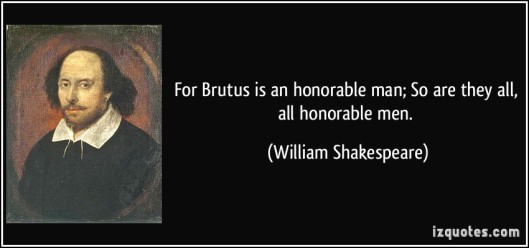
And so it has come to pass, that the single least qualified individual in the history of this nation to ever run for President has actually won the office via Electoral (NOT popular) vote: a racist, misogynist, narcissistic sociopath, a self-confessed serial sexual predator, a bald-faced fascist, with no grasp of history, science, geopolitics, economics, or even business (beyond filing for bankruptcy and manipulating tax law.) But we are told we must be patient of our neighbors and family who voted for this despicable swine because they (the family and neighbors, not the swine) are, after all, “all honorable men.”i

honorable-menBullshit.

Continue reading

Hillary Derangement Syndrome

Tags

, , ,

DEFINITION: “Hillary Derangement Syndrome” (“HDS”)

The willingness to accept – without a first, much less a second thought – anything read or stated about Hillary Clinton, on no other grounds than that the thing read or stated is negative.

I’d rather hoped to avoid writing another political blog post for a while, but closing in on the election it is clear that the general insanity that has come to define (to the extent that it hasn’t strangled it in the streets) our community of discourse that is American politics, I find myself having to say one last word before the votes are all cast and counted.

Severalls Lunatic Asylum

Interior of Severalls Insane Asylum, something to look forward to in Trump’s America


One of the more despicable points of intractable dogma amongst so many “cry baby” progressives is that, “If we can’t get everything we want, exactly the way we want it, the instant we want it, then making things worse is actually making things better!” Now, few if any of such progressives (who are not all, or even a majority of progressives, by any means) will actually admit to embracing such a position, since doing so would require a level of intellectual honesty which they have rejected wholesale. Nevertheless, it is there, and it manifests itself as raving HDS that is often times even more singularly unhinged than what one finds on the right-wing of the political spectrum.

Continue reading

The Bad Seed

Tags

, ,

Where an argument comes from is not supposed to be relevant to the logical credibility of the argument, and there are named fallacies that highlight just such errors. (I’m going to talk loosely here, at first, so take the immediately following with a grain of salt.) The genetic fallacy says that where an argument comes from – its origins or “genesis” – should not be treated as relevant to the cogency of that argument. A somewhat more specific version of the genetic fallacy is a variant on the argumentum ad hominem, known as the tu quoque fallacy. “Tu quoque” basically means “you too,” or “you’re another.” The idea with this latter is rejecting the advice or argument of a person on the grounds that that person is doing the very thing she or he is advising against.bad-seed-1

However, such a rejection is clearly not only unfair, but unjustifiable. An alcoholic may not be able to stop drinking, but is certainly in a position to understand the evils of that drinking, and present cogent arguments against it. Similarly, the nicotine addict, slowly suffocating from emphysema may not be physically or psychologically able to stop smoking, but said person is certainly well placed to understand the viciousness of doing so, and can offer extremely valid arguments against ever picking up the habit. But there are times when the source of a claim really is important, and needs to be taken into account when evaluating a claim. The probative value of evidence which we are not able to check ourselves often rests on the credibility of the source. The superficial version of the genetic fallacy that I presented above says that the source of a claim should not be given any weight, and that the argument should be evaluated by itself and on its own terms. But when we do not have complete control and/or mastery over those terms, then that source must also be taken into account. Continue reading

Slippery Slope

Tags

, ,

The “slippery slope” is the fallacy (if it is a fallacy – some might dispute that!) that says certain actions cannot ever be taken because they lead to other actions, which make still other actions possible, etc., leading finally to some kind of catastrophic action which can no longer be denounced or argued against because of all the little steps that led up to it and gave it permission. It is a frequent traveler with those who would argue against any sort of incremental changes to social institutions or the guarantee of civil rights. Thus, we’ve seen a great deal of slippery slope “reasoning” amongst conservatives denouncing marriage equality, with such claims being floated as, “If gays are allowed to marry, what is to prevent people from marrying farm animals, or young children?” (I’ll not link to any such claims; if the rock you’ve been hiding under these past several years has kept you shielded from such nonsense, I will not be the one responsible for breaking your bubble.)slippery-slope

What inspired me to write about this now was my recollection of how this fallacy relates to the famous sorites paradox: Sorites: noun so·ri·tes \sə-ˈrī-(ˌ)tēz\ The paradox (if it is a paradox) rotates around the question of how trivial actions, too small to have any consequence of their own, nevertheless can sum up to be massive and absolute distinctions. So, in a sense, slippery slope is going down the hill, while sorites is going up it. Continue reading

Natural Order

Tags

, ,

I was looking at a picture that I had taken a few years back, of Thumb Butte, just outside of Prescott, Arizona, when the phrase “natural order” popped into my mind. What made this stand out (because words, phrases, and images are popping into my mind all of the time – it is like Tourette’s of the imagination) was the fact that it came to me flagged as ironic. What struck me as ironic, gazing with affection at one of my favorite places in the world, was how seriously disorderly nature really is. That’s what is so lovely about it – it shatters our boundaries with promiscuous abandon. And the only way we prevent such shattering is by murdering nature outright – which, of course, we are also working on with rather more energy and enthusiasm than we ought.thumb-butte-3-long-loop-006

The natural sciences look to distill, while the engineering and technical enterprises look to impose, order from and upon Nature. And there are certainly good and thoroughly ethical reasons for all of these valuable activities. We live longer, healthier lives (certainly on average) than we ever did in the past. Further, the quest for knowledge is, at least arguably, one of the most singularly noble pursuits available to our imaginations. But I’d like to say a little about the negatives, from my version of a Whiteheadian perspective. Now, I am not anti-science; when I’ve criticized contemporary disciplines (see below) it is for their abandonment of real science. Nor am I any manner of luddite; I am composing this missive on a computer, I intend to post it on the internet; I’ve a library that would be the envy of even the wealthiest individuals from a century ago on my Kindle; even as an introvert, I have connections to the outside world far beyond the imaginations of all but the luckiest persons from previous centuries. But there are costs, and we ought to acknowledge that there might be such a thing as “too much.” I began wondering, looking at that picture of Thumb Butte, if that too much might be related to our simplistic notions of “natural order.” Continue reading

Internal/External

Tags

, ,

A little while ago I rather casually glossed the idea of internal and external forms of relatedness – worse yet, I did so in the concept of discussing Whitehead’s philosophy. This seems like a good time to flesh those ideas out a bit more, as they are interesting in their own right, and will also serve to illuminate another respect in which Whitehead’s process metaphysics differs from so much of the Western canon.entrance-exit

I have been arguing in two previous posts (with a minor political interruption along the way) that what a “thing” “is”, is a matter of how that “thing” relates to the world, and that those relations have a reality in their own right over and above being a merely parasitic way of talking about things and other things. This is a bold claim. Along the way, I’ll be using the terms “relations” and “forms of relatedness” pretty much synonymously. This is nothing to get excited about, simply an effort on my part to mix up my language a bit so that it does not become tedious from repetition. Continue reading

Plenum

Tags

, , ,

So my last round of musing was on the subject of “emptiness.” Connected to that idea is the concept of “fullness,” of “plenum.” I suspect that one of the primary failures of contemporary metaphysics is misunderstanding which is really which: that is to say, what is really full, and what is really empty. Here again, Whitehead’s process metaphysics offers us important insights. Because how we think of “fullness” – of a thing, a region of space, or whatever – is directly correlated to what we believe to be genuinely real. I argued earlier against the naïve concept of “empty” space, pointing out that not only is that space (according to physics) a broiling froth of micro events and virtual particles, but that it is also densely awash in relational connections to the rest of the universe. Adding to that earlier discussion, one could say that the space itself is a kind of “thing”: it is an event in its own right, it is a process of space relating itself to other spatial events. In this regard, Whitehead rejected the “material aether” that dominated astrophysical thought in the days between James Clerk Maxwell and Albert Einstein (the last quarter of the 19th C. to the first decade or two of the 20th), and argued instead for an “aether of events” as the dominating characteristic of space.plenum

Without assuming – indeed, explicitly denying – any absolute sense of either “emptiness” or “fullness,” what sorts of relative conditions might lead us to characterize one sort of collection as generally more full, and another as comparatively more empty? Well, for that we need a notion of what it is that fills, hence that which is not there when things are empty. My argument is that what “fills” are events and relations. Continue reading