
So, Herr Drumpf is the presumptive Republican presidential nominee, and the concern about fascism coming to America has itself taken on yet another layer of poignancy. Concerns are being raised by individuals as diverse as neo-con and Iraq war cheerleader Robert Kagan, and leading expert on the structural characteristics of fascist movements, Robert O. Paxton. It is Paxton’s work on the subject that most interests me here. While this post can be viewed as a follow up to my earlier one (hence the recycled picture), this post can also be viewed as the first of a two part series on aspects of those structural characteristic Paxton so carefully analyzed, and how they are visibly playing themselves out this election cycle. My argument here will be a fairly informal one – I’ll not be providing detailed endnotes or extensive quotations (although, such quotes as do appear will have their location in the Kindle text provided). This is because the details I’ll be offering from Paxton’s work are entirely uncontroversial readings of his arguments. Besides which, Paxton’s book is readily available, eminently readable, and an essential book for any citizen caught up in contemporary events.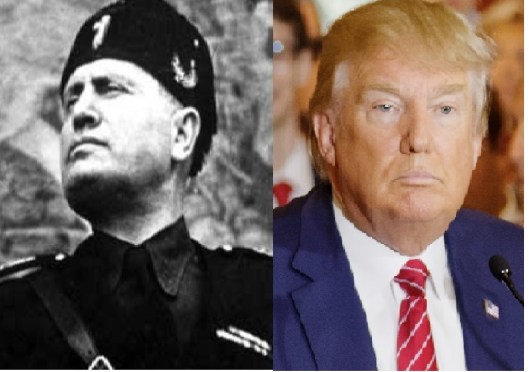
My concern here is to remind folks not only of some of the essential characteristics that go into making a fascist movement – and fascism is always a movement, a populist one at that, and not a party or a collection of policies – and consider some of the ways the Trump phenomenon differs from other post WWII forms of conservative extremism, ways that actually push it closer to fascism. The movements I’ll be describing will be European ones, and most of what I’ll have to say about these European forms of conservative extremism will be based on chapter 7 of The Anatomy of Fascism. First, however, it will be useful to remind ourselves about the nature of fascism itself. Continue reading





 THE QUANTUM of EXPLANATION