• About me (Gary L. Herstein, Ph.D.) / Contact form
  • Furious Vexation (general questions here)
  • Statement of Intent
  • With regard to Comments and Spam

THE QUANTUM of EXPLANATION

~ Science, logic, and ethics, from a Whiteheadian Pragmatist perspective (go figure)

THE QUANTUM of EXPLANATION

Category Archives: Critical Thinking

Slippery Slope

13 Thursday Oct 2016

Posted by Gary Herstein in Critical Thinking, fallacies, Inquiry, Logic

≈ Leave a comment

Tags

Critical Thinking, fallacies, Logic

The “slippery slope” is the fallacy (if it is a fallacy – some might dispute that!) that says certain actions cannot ever be taken because they lead to other actions, which make still other actions possible, etc., leading finally to some kind of catastrophic action which can no longer be denounced or argued against because of all the little steps that led up to it and gave it permission. It is a frequent traveler with those who would argue against any sort of incremental changes to social institutions or the guarantee of civil rights. Thus, we’ve seen a great deal of slippery slope “reasoning” amongst conservatives denouncing marriage equality, with such claims being floated as, “If gays are allowed to marry, what is to prevent people from marrying farm animals, or young children?” (I’ll not link to any such claims; if the rock you’ve been hiding under these past several years has kept you shielded from such nonsense, I will not be the one responsible for breaking your bubble.)slippery-slope

What inspired me to write about this now was my recollection of how this fallacy relates to the famous sorites paradox: Sorites: noun so·ri·tes \sə-ˈrī-(ˌ)tēz\ The paradox (if it is a paradox) rotates around the question of how trivial actions, too small to have any consequence of their own, nevertheless can sum up to be massive and absolute distinctions. So, in a sense, slippery slope is going down the hill, while sorites is going up it. Continue reading →

Arrow’s Paradox of Voting

26 Tuesday Jul 2016

Posted by Gary Herstein in Critical Thinking, Fascism, Logic, Politics

≈ 1 Comment

Tags

Authoritarians, Critical Thinking, Logic, Politics

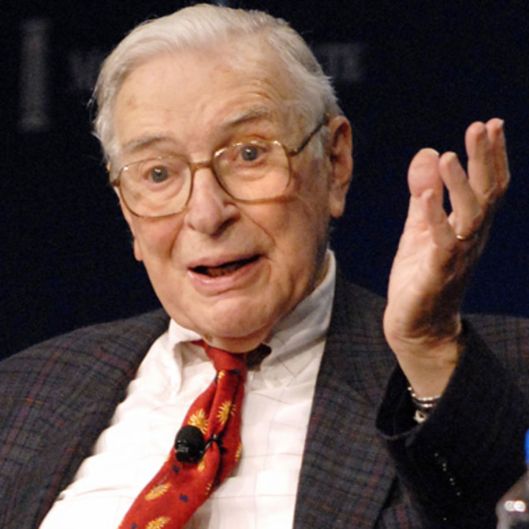
Kenneth Arrow is a well known economist, logician, statistician, and political theorist. While his scholarly contributions are numerous, his best known was his first, published as a part of his dissertation. This is the above titled “paradox of voting,” which is also referred to has his “impossibility theorem.” This latter is evidently the technically correct title. However, I learned about it as the paradox of voting, and that’s the title I’ll stick with here. For one thing, calling it his “paradox of voting” makes it more clear at the outset what the theorem is about, and suggests what is really at stake. Details of the impossibility theorem are readily found for no more effort than looking, so my intention here is to provide a non-technical gloss of the topic. Still, enough of what I say here is about basic logic (and not merely political screed) that I am satisfied that this topic falls within my basic parameters for this blog.

Kenneth Arrow

Kenneth Arrow

The stakes here could scarcely be any higher, as they effect the very foundation of our nominally democratic system. Because of how our voting and electoral system is set up, we have a “winner take all” format that can (and often enough, does) allow a person to be elected even thought that person did not receive a majority of the votes. Once you have more than two candidates (or more than two parties) involved in any particular election, it is no longer possible to representatively distribute preferences in the election. This is the somewhat fancy way of saying things. The simpler way of saying it is that the more widely detested candidate can win. Continue reading →

The Qualities of Quantities

20 Wednesday Jul 2016

Posted by Gary Herstein in argument, Critical Thinking, Inquiry, Logic

≈ Leave a comment

Tags

Critical Thinking, Inquiry, Logic

An oddity about philosophers, and especially logicians, is that when they talk about “quantity” they are not talking about numbers, or numerical counts. Rather, they are talking about the ways things can be gathered together (or singled out) using words like “all” or “some.” These ideas are called “quantifiers.” I want to do three things (briefly, as always) here: say a little about the “basic” quantifiers (“all” and “some”), say a little about how they get dropped from common discourse and argument – whether from laziness or deliberate obfuscation – leading to much gratuitous confusion. Finally, I want to say something about quantifiers that typically do not make it onto philosophers’ or logicians’ lists, yet are at least as common in ordinary discourse and argument as the “principal” two are. My purpose here (as always) is not to lead you onto the path of righteous proof making, but simply alert the reader to the importance of these operators so that they might not slip by quite so stealthily in the future.abacus_logo1

The second greatest sin in logic is to allow things to pass implicitly; the greatest sin is to block the road of inquiry, which is one of the things that happens when concepts are allowed to pass implicitly. Allowing things to remain implicit means that vague statements are permitted, by innuendo, to become concrete, thus leading us astray (blocking inquiry) from the directly stated vagueness. Sometimes things really are ambiguous, and they must be allowed to stay that way until real data, rather than jumping at conclusions, enables us to clear up the ambiguity. That, or recognize that the ambiguity is not – or, at least, not yet – cleared. Continue reading →

Models and Interpretations

18 Saturday Jun 2016

Posted by Gary Herstein in Critical Thinking, General Philosophy, Logic, Religion

≈ 2 Comments

Tags

Critical Thinking, General Philosophy, Logic, Religion, Science

A number of years ago I got into a discussion with an acquaintance about what kind of symbol system tells us “the truth” about the world. This is not how my interlocutor expressed the problem; she simply insisted that mathematics gives us the truth. I tried many different approaches to get her to understand that what she was saying made absolutely no sense, because the first thing that must happen (once any collection of symbols is at hand) in order to talk about truth was that those symbols have to be interpreted, and such interpretation is not given in advance. Thus, I have a modest background in some advanced forms of mathematics (mainly formal logic, abstract algebra, and a touch of differential geometry), and I understand that simply having a bunch of squiggles in front of you is not enough to adjudicate whether those squiggles say anything at all, much less anything that is true. Meanings must be assigned to those squiggles such that they hang together to form some kind of model, and that model then must be associated with the world in some form such that the model can be interpreted as making claims about the world which then can be interpreted as to its truth content. And here, “world” can mean either the world of concrete experience or a purely abstract “world” which is itself something of a mathematical construct. Also, my choice of the term “truth content” rather than “truth value” is not an innocent one: I wish to leave open the possibility that truth evaluations can be more complex and multi-dimensional than the mere assignment of values.Three Mesas

It became very clear that while I understood my acquaintance’s position, she in no way understood mine. This was because while I was repeatedly able to paraphrase – that is, interpret – her argument, when asked to do the same for mine she was unable to do anything other than repeat her own position, which addressed none of the points I had made. In later years, she was known to crow a bit about how she “won” the argument. To be fair, in retrospect I realize that there were a number of ways I could have made my own position clearer, as it was burdened by a much greater degree of philosophical nuance than the position she was presenting. And I confess that I do not think quickly on my feet; indeed, I’ve only ever suggested that, given time, I can think thoroughly. (One of the reasons I went into philosophy is because a line like, “Herstein! If we don’t get this metaphysical principle out the door by end of business today, our competition is going to crucify us!” is not something one is ever likely to hear from one’s department head.) Continue reading →

Fiat Justitia Ruat Caelum

12 Sunday Jun 2016

Posted by Gary Herstein in Critical Thinking, Hillary Clinton, Politics, Trump

≈ 3 Comments

Tags

Critical Thinking, Donald Trump, Hillary Clinton, Politics

“Let justice be done, though the heavens fall!”

(This is the third in a series of posts relating to the contemporary political scene in the United States. I’d originally intended there only be two posts in this series, but addressing issues at the progressive side of politics needed more comment. I’ve had plenty to say about the authoritarian character of conservatives.)

The above phrase was much favored by the philosopher Immanuel Kant and, it would seem, those people I previously described as “cry baby” progressives. There is a certain thrilling nobility to the sentiment; or, at least, that’s how it might first appear to people driven by ideology and indifferent to consequences. This is made evident by the regular as clockwork whining by such progressives (because they didn’t get everything they wanted, the instant they wanted it, exactly the way they wanted it) about what the cry-babies pejoratively refer to as “lesser-of-two-evils-ism.” I’ve seen some people – I believe the Green party candidate Jill Stein is one, but I didn’t save the URL and wouldn’t dignify it with a link if I had saved it – claim something to the effect that this oogity-boogity “lesser-of-two-evils-ism” is “anti-democratic” (regardless of the fact that it won far more votes than the alternative of Fiat Justitia Ruat Caelum. Evidently, for these cry-babies, not getting everything they wanted, the instant they wanted it, exactly the way they wanted it, is “anti-democratic.”) So it would seem that these cry-baby progressives would rather burn the world to a cinder, because obviously that always makes things better. Just look at how Shrub … er, I mean, Bush Jr. … advanced progressive causes with his programs. (And who cares about the upwards of one million – that’s 1,000,000 – Iraqis who died to justify our infantile self-righteousness.) Because, after all … Fiat Justitia Ruat Caelum.Votaire Perfect

But how much “justice” can really be on the agenda when one is prepared to let the world be reduced to rubble on no other account than that it failed to provide perfect justice instantly, right here, right now? Cry-baby progressives often talk about “revolution,” but they seldom if ever talk about hard work. (The overwhelming majority of progressives who do talk about hard work, about incremental change, and about such things as the long bend in the “arc of the universe,” strangely never find themselves welcomed to the cry-babies’ club meetings.) The condemnatory language with which certain progressives use the “lesser-of-two-evils-ism” terminology is intended to hide from you the fact that the alternative is the GREATER-of-two-evils. But these cry-baby progressives do not want to deal with this fact; rather they want to dazzle you with fantastical promises that amount to winning the lottery in a single stroke without even purchasing a ticket. “We must reject the system!” is their rallying cry, raised in voices loud enough to drown out anyone wondering how they plan to replace that system, especially when any effort to make that system better is just too hard to contemplate. Justice never comes without hard work, and hard work only ever makes things a little bit better at a time. But these folks do not want “a little bit” – they want it all, and they want it now. Continue reading →


Cry Babies

10 Friday Jun 2016

Posted by Gary Herstein in Critical Thinking, Politics, Uncategorized

≈ 7 Comments

Tags

American Progressivism, Critical Thinking, Politics

This is the promised follow up to my “American Fascist” post. I began writing this a long time ago, but was never happy with it. So what appears now is a massive rewrite in the context of contemporary events.It ought to go without saying that the persons I am being critical of in this post form a small (albeit, vocal) minority of American Progressives.Crying-baby-white-background

Contemporary events are informed by, and created from, past events. And the past events that need to be resolutely, uncompromisingly, born in mind here, all have in common the FACT that fascism only ever came to power because those on the political left were so divided and busily bickering amongst themselves that their infantilism and ideology prevented them from presenting a unified front against an enemy that was unimaginably worse than their own childish, internecine grievances. Among our contemporary grievances is the rather presumptuous coronation of Hillary Clinton as the Democratic nominee by major news outlets, before the final round of voting actually made her so. (Fantasies of Sanders “flipping” superdelegates at the convention were always nonsense on stilts; the results from New Jersey and California make them even more so.) This premature declaration has generated a considerable amount of complaint from the political left, including questions of whether it might have skewed the vote in California. Still, great deal of that complaint has taken on the air of the sort of cry-baby-ism we often see from persons with politically progressive leanings. And that is a problem. Continue reading →

Luck is Not a Method; Hope is Not a Plan

25 Monday Apr 2016

Posted by Gary Herstein in Critical Thinking, Inquiry, Logic

≈ 4 Comments

Tags

Critical Thinking, Habit, Inquiry

Having taught a variety of philosophy courses in my less than traditional career, one of the ideas I am most committed to conveying to my students is that it is not good enough – not by a long shot – to simply be “right.” Quite the contrary: it is better to be mistaken for good reasons than to be “right” by accident. After all, even a broken clock is “right” twice a day, but that doesn’t make it a reliable timepiece. It takes a real commitment to inquiry and logic to be mistaken based on genuinely substantive reasons. And the most important difference is, of course, that if you are mistaken, but on the grounds of solid reasons, then that mistake can be rectified by finding and correcting the mistake in those reasons. Because if you are mistaken on the grounds of good reasons, then it is necessarily the case that the mistake is somewhere in those reasons.craps2

This can be a tricky notion for younger persons to accept. (It is an especially tricky notion for narcissistic sociopaths of any age to accept. Consider, for example, Donald Trump … ) The notion that “being right” is the only thing that counts, regardless of how one achieves that particular form of “right”, is arguably a driving factor behind a great deal of plagiarism. But conclusions that are achieved in fashions that are not methodologically sound are not “conclusions” of any kind, they are dogmatically asserted bullet-points, as cognitively vacuous as mere barnyard noises. Not only do such things fail to advance inquiry, they actively impede inquiry. Continue reading →

Just Giving it Away

31 Thursday Mar 2016

Posted by Gary Herstein in Critical Thinking, Education, Health Care, Socialism

≈ 2 Comments

Tags

Critical Thinking, Education, Health Care, Socialism

I notice on social media that various conservatives are becoming increasingly irate at being reminded of the fact that things like roads, police, fire protection, are essentially socialist programs which they are not only happy to use without thought, but view as their well-deserved entitlements. Jim Wright, over at Stonekettle Station, set off something of a firestorm on Twitter for pointing out that, “Calling universal healthcare and public education free stuff is the same as calling a Navy aircraft carrier a free ship.” The conservative outrage, apparently, stems from the “fact” that things like roads, police, and fire departments, are the sorts of things that government is “supposed” to provide. What the self-righteous conservative objects to is all of that other stuff, like public education and healthcare, that socialists propose to just “give away.”

Gift

It is very hard to give a measured response to such immeasurable ignorance and hypocrisy. It really is not all that long ago that fire, police, and roads were the sorts of things that governments did NOT bother to provide. Part of the devastation of the Great Fire of London in 1666 was that there was no uniform, government provided and enforced system of fire protection and suppression. The introduction of the “King’s Highway” (“high,” because the road was built up above the surrounding ground, so that when it rained the road would not turn into an impassable quagmire) was something of a revolutionary approach to transportation. The idea of an actual police force didn’t really come into being in the European world until the 19th Century. In earlier times such tasks were handled by local thugs and warlords whose only claim to “law” was that there was no one around who might challenge their arbitrary decisions and actions. So why are these things suddenly just and only the sorts of things that government is supposed to provide? Specifically, if fire and police protection, roads, water and sewage, are the sort of things government is supposed to provide, then why are things like healthcare, education, minimal standards of living, access to basic resources such as information and community, examples of things that those nasty-evil socialists want to just “give away”? Continue reading →

Sending the “Wrong Message”

29 Tuesday Mar 2016

Posted by Gary Herstein in Critical Thinking, General Philosophy, Humor, Logic

≈ 5 Comments

Tags

Critical Thinking, General Philosophy

One of the most singularly asinine claims that might be floated in any discussion is the one that follows the pattern that, “doing X will send the wrong message.” Characterizing such infantile twaddle as “asinine” is almost certainly an offense to all those statements in the world that are genuinely (but only) asinine. What makes such statements so unqualifiedly despicable is that they are all built around the fatuous presupposition that any act or statement is so unambiguously closed in its meaning that it can only send one, equally closed and unambiguous, message. Such childishness is of a piece with those who claim to take the Bible (or any other text) “literally,” as though the “literal” interpretation of any text were even possible in the abstract, much less actualizable in the concrete. I’ll have a few words to say on this latter topic at the end.404-error-page-not-found

What brought this to mind was a brief news story on the radio this AM, that mentioned how the Illinois legislative branch was considering a measure to decriminalize (note: NOT legalize, because that would generate huge amounts of revenue for the state, and we can’t allow that to happen … ) possession of small amounts of marijuana (I forget how much exactly). In addition, the bill would specify how much THC one could have in one’s system to be considered legally impaired for driving. Several law enforcement and “concerned citizens” groups oppose such actions on the grounds that it would “send the wrong message” to our delicate and oh-so-easily influenced youth. Well, as soon as the “wrong message” meme surfaces, you know the persons throwing this claim about are either stupid, lying, or both. So let us look at stupid first, lying second, and finish (as promised) with “textual literalism.” Continue reading →

Halfway Around The World.

16 Tuesday Feb 2016

Posted by Gary Herstein in Critical Thinking, Logic, model-centrism, Philosophy of Science

≈ 6 Comments

Tags

Critical Thinking, Logic, model-centrism, philosophy of science

“A lie can travel halfway around the world before the truth can get its boots on.” This well known saying is variously and unreliably attributed to a number of persons, from Mark Twain to Winston Churchill. But as long as one is not trying to steal the words for one’s self, it is less important who said a true thing, than that the thing said be true. Credit should be given, of course, when credit is due, and identifiable. But just because, say, Abraham Lincoln said a thing, that thing is not automatically true, any more than if Richard Nixon said something, it is automatically false. Now, it is not an ad hominem to call a liar a liar, nor is it a fallacy to question the credibility of a person whose credibility has been shredded by repeated abuses of the truth. Still, one must be very careful when it comes to either accepting or dismissing a statement merely on account of its source. If you dismiss an alcoholic’s statement that drinking is bad for you, on account of the fact that the person making the statement is an alcoholic (who is still drinking), you’ve committed the tu quoque version of the argumentum ad hominem. If anything, the alcoholic is better situated to speak with genuine expertise on the damage of alcoholism than, say, a more sober member of society.

Muddy Hiking Boots

But to return to our original point, there is an intransigence to falsehoods that is not easily dislodged by anything so inconsequential as reason and truth. There are many psychological studies (I’ll not link to any – they are easy to find) that point out that, for example, climate change denialism – devoid as it is of any shred of valid or scientific justification – nevertheless becomes more stubborn when it is confronted with logic and facts that admit of no rational dispute. The lie, as it were, digs in its boots. I’ll skip over any discussion of those rhetorical techniques that do seem to work, because such methods are not my interest here and it pisses me off that I’d ever have to resort to them. Rather, I want to look at those factors that let the lie out of the starting gate before the truth even knows that there is a race today. In particular, what is it that makes the lie so easy, and the truth so hard? Continue reading →

← Older posts
Newer posts →
Follow THE QUANTUM of EXPLANATION on WordPress.com

Enter your email address to follow this blog and receive notifications of new posts by email.

Blogs I Follow

  • The Shanarchist Cookbook
  • Cote du Golfe School of Fencing
  • Professor Watchlist redux
  • Free Range Philosophers
  • thenonsequitur.com
  • Blog Candy by Author Stacey Keith
Whitehead, Alfred North

Copyright Announcement

© Dr. Gary L. Herstein and garyherstein.com, 2014 -- 2024. Unauthorized use and/or duplication of this material without express and written permission from this site’s author and/or owner is strictly prohibited. Excerpts and links may be used, provided that full and clear credit is given to Dr. Gary L. Herstein and garyherstein.com with appropriate and specific direction to the original content. (In other words, share but acknowledge.)

Go back

Your message has been sent

Warning
Warning
Warning
Warning

“But in the real world it is more important that a proposition be interesting than that it be true. The importance of truth is, that it adds to interest.” – Alfred North Whitehead, Process and Reality

Archives

Spam Blocked

70,611 spam blocked by Akismet

Blog at WordPress.com.

The Shanarchist Cookbook

Cooking up food for thought & Shanarchy. I am a Philosopher, writer, meditation & mindfulness teacher, & artist.

Cote du Golfe School of Fencing

Fencing / Sword Classes & Lessons Naples, Bonita, Estero, Florida

Professor Watchlist redux

Free Range Philosophers

Loving Wisdom Beyond the Academy

thenonsequitur.com

Blog Candy by Author Stacey Keith

Science, logic, and ethics, from a Whiteheadian Pragmatist perspective (go figure)

  • Subscribe Subscribed
    • THE QUANTUM of EXPLANATION
    • Join 123 other subscribers
    • Already have a WordPress.com account? Log in now.
    • THE QUANTUM of EXPLANATION
    • Subscribe Subscribed
    • Sign up
    • Log in
    • Report this content
    • View site in Reader
    • Manage subscriptions
    • Collapse this bar
 

Loading Comments...