
• About me (Gary L. Herstein, Ph.D.) / Contact form
  • Furious Vexation (general questions here)
  • Statement of Intent
  • With regard to Comments and Spam

THE QUANTUM of EXPLANATION

~ Science, logic, and ethics, from a Whiteheadian Pragmatist perspective (go figure)

THE QUANTUM of EXPLANATION

Category Archives: Complexity

Limits of Reason, 1.X … rev Ϡ

20 Wednesday Sep 2023

Posted by Gary Herstein in Complexity, Logic, Philosophy of Science

≈ Leave a comment

Tags

computability, Logic, philosophy of science

Yes, I have been away from this blog for a long time. No, I am not going to talk about that.

I’ve been thinking a great deal about the connections (possible and otherwise) between various aspects of theoretical computer science, and reasoning in general and empirical science in particular. When I talk about “theoretical computer science”, I definitely do not mean applied problems such as the rendered graphics in an FPSRPG (and that shot most assuredly DID hit, you cheating bastards!) No, I mean the mathematical and logical puzzles associated with what it is possible to compute, in the absolute limit of possibility, and what (among that collection of puzzles) can be reasonably computed given the physical and temporal constraints of the universe.
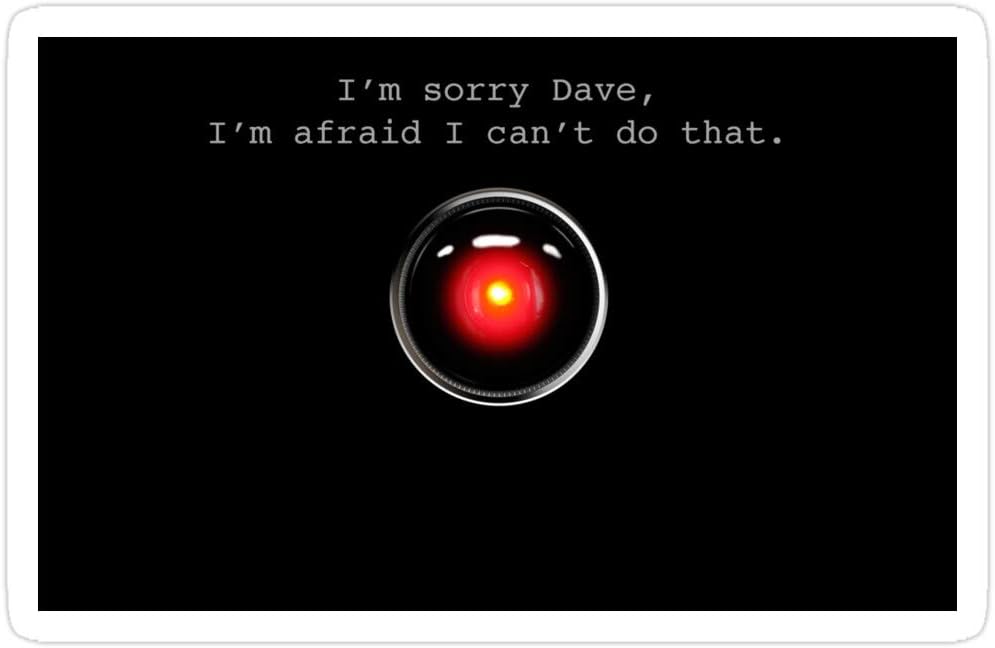
Computability: What can or cannot be computed, period. For example, can you write a program that will test all other programs to see if they run. Absolutely not! Take the program itself, flip a few relations, and then feed that to itself and you will force it into an infinite loop that it cannot solve. Due to the logician Alonzo Church, this is known as the “Halting Problem.” One of the favorite ways of demonstrating a problem is unsolvable is by proving its solution would also solve the Halting Problem.
Pages: 1 2

Complexity – It Ain’t Simple (part 2 of 2)

30 Monday Aug 2021

Posted by Gary Herstein in Complexity, Logic, Mathematics, Philosophy of Logic

≈ Leave a comment

Tags

Complexity, Logic, Philosophy of Logic

The guiding motto in the life of every natural philosopher should be, Seek simplicity and distrust it.”

– Alfred North Whitehead, The Concept of Nature (end of chapter VII.)

Ultimately, the only way we know how to measure the complexity of some process or phenomenon – beyond excruciatingly vague and unhelpful statements like, “this is really complicated” – is by measuring how hard it is to solve the mathematical equations used to characterize the problem. All the rest, even when palpably, indisputably true, is just hand-waving. Sometimes hand-waving makes us feel better, because we need to burn off the energy pent up in our frustration. But it never really tells us anything. On the other hand, we really do have some effective means of measuring how hard it is to solve some mathematical equation or other, and we’ve refined such measures significantly over the past fifty years because such measures tell us a great deal about what we can and cannot do with our beloved computers (which includes all of your portable and handheld devices, in case you weren’t sure.)

Some problems simply cannot be solved. This even despite the fact that the problems in question seem perfectly reasonable ones that are well and clearly formulated. (Actually, being well formulated makes it easier to demonstrate when a problem cannot be solved.) Some problems can be solved, albeit with certain qualifications, while still others are “simply” and demonstrably solvable.i However, saying that a problem is “solvable” – even in the pure and “simple” sense (notice how I keep scare-quoting that word) – doesn’t mean that it can be solved in any useful or practical sense. If the actual computation of a solution ultimately demands more time &/or computer memory space than exists or is possible within the physical universe, then it is unclear how we mere mortals benefit from this theoretical solvability.ii It is these latter considerations that bring us into the realm of computational complexity.

Pages: 1 2
Follow THE QUANTUM of EXPLANATION on WordPress.com

Enter your email address to follow this blog and receive notifications of new posts by email.

Blogs I Follow

  • The Shanarchist Cookbook
  • Cote du Golfe School of Fencing
  • Professor Watchlist redux
  • Free Range Philosophers
  • thenonsequitur.com
  • Blog Candy by Author Stacey Keith
Whitehead, Alfred North

Copyright Announcement

© Dr. Gary L. Herstein and garyherstein.com, 2014 -- 2024. Unauthorized use and/or duplication of this material without express and written permission from this site’s author and/or owner is strictly prohibited. Excerpts and links may be used, provided that full and clear credit is given to Dr. Gary L. Herstein and garyherstein.com with appropriate and specific direction to the original content. (In other words, share but acknowledge.)

Go back

Your message has been sent

Warning
Warning
Warning
Warning

“But in the real world it is more important that a proposition be interesting than that it be true. The importance of truth is, that it adds to interest.” – Alfred North Whitehead, Process and Reality

Archives

Spam Blocked

70,611 spam blocked by Akismet

Blog at WordPress.com.

The Shanarchist Cookbook

Cooking up food for thought & Shanarchy. I am a Philosopher, writer, meditation & mindfulness teacher, & artist.

Cote du Golfe School of Fencing

Fencing / Sword Classes & Lessons Naples, Bonita, Estero, Florida

Professor Watchlist redux

Free Range Philosophers

Loving Wisdom Beyond the Academy

thenonsequitur.com

Blog Candy by Author Stacey Keith

Science, logic, and ethics, from a Whiteheadian Pragmatist perspective (go figure)

  • Subscribe Subscribed
    • THE QUANTUM of EXPLANATION
    • Join 123 other subscribers
    • Already have a WordPress.com account? Log in now.
    • THE QUANTUM of EXPLANATION
    • Subscribe Subscribed
    • Sign up
    • Log in
    • Report this content
    • View site in Reader
    • Manage subscriptions
    • Collapse this bar
 

Loading Comments...