
or
Why You Got to Hate So Hard on Men?
It has been a while since I’ve gone explicitly political, but that’s as much a matter of inspiration of the moment as design. If you’ve been following social media and the news stories generated by its trends, then there is a good chance that you can guess what my topic here will center around. For those who do not spend their days immersed in social media (and may the gods bless and smile upon you all your days!), I’ll offer a brief survey.
This question is posed to women – You are lost in the woods. You turn a corner and you confront one of either A) or B)
- A wild bear, or
- A lone man unknown to you.
Which would you prefer?
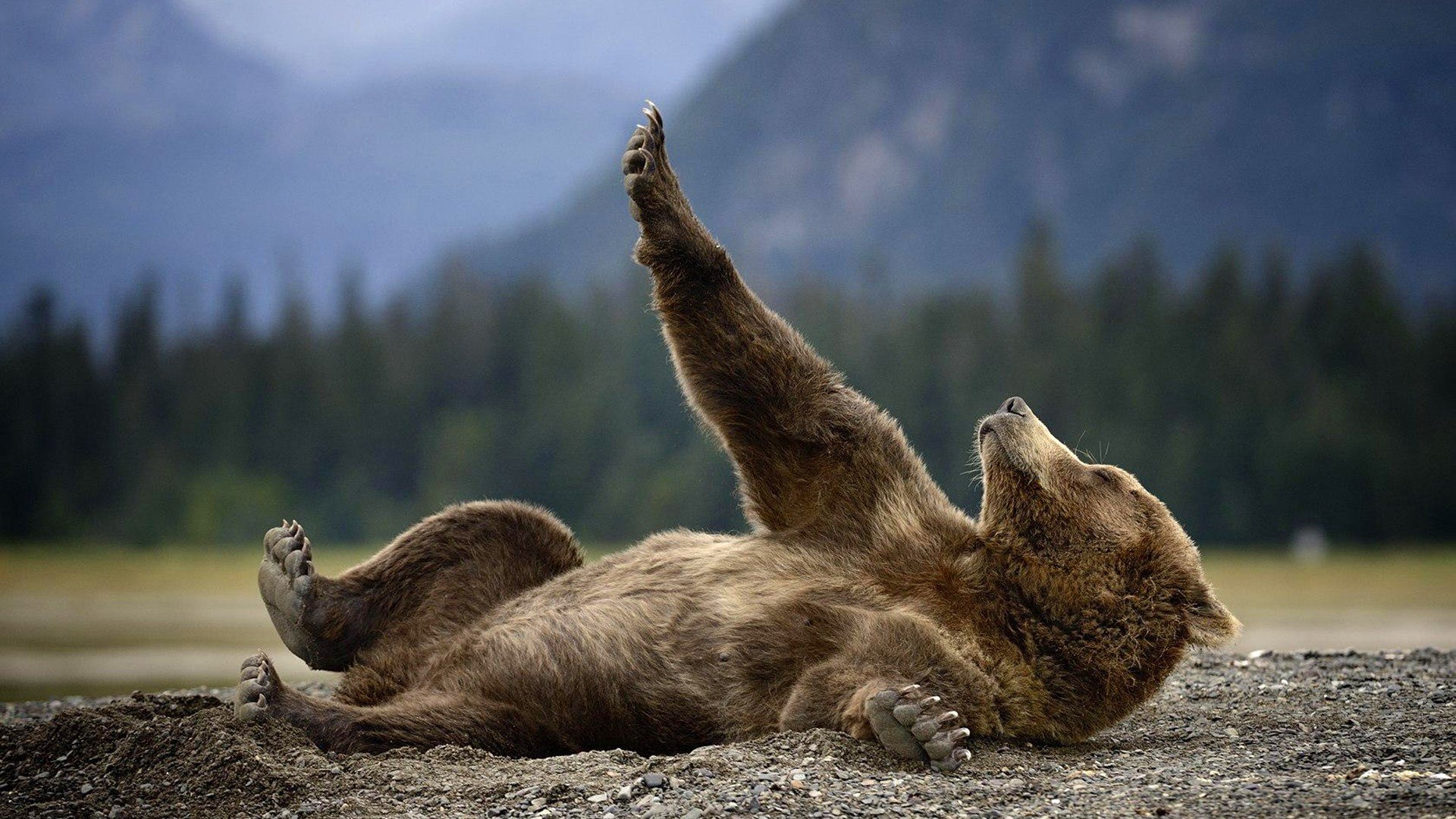
A significant majority of women choose the bear. Needless to say, as unsurprising and reasonable as this answer is, it has caused an enormous number of Tragically Histrionic Butthurt Men (“THBM”) to delaminate over the “injustice” of such “rampant” and “indefensible” “man-hatred”. Yet, as I just mentioned, the response by women is BOTH unsurprising AND reasonable. Let me say a few words on why that is.
The following statements are copied and pasted directly from the National Sexual Violence Resource Center (NSVRC) (so I’ve skipped the quotation marks):
- One in five women in the United States experienced completed or attempted rape during their lifetime.
- Nationwide, 81% of women and 43% of men reported experiencing some form of sexual harassment and/or assault in their lifetime.
- One in three female victims of completed or attempted rape experienced it for the first time between the ages of 11 and 17.
- Almost one in four undergraduate women experienced sexual assault or misconduct at 33 of the nation’s major universities.
This is only a partial list. All of these numbers are on the low side, since they are based (as they must be) exclusively on acts of harassment and assault that are reported. Per the first one, I’ve seen reports that set the number of women raped in their lifetime at 1-in-3. But for purposes of consistency, I will stick with the NSVRC statistics. Notice also the third bullet point: they experienced the rape … for the first time. Let the implications of the qualifier “first” sink in, for a moment. (Sources for the data are provided at their website, linked to above.)
Let’s be clear about something else here: these acts of harassment and assault are not being perpetrated by bears, and only under the most vanishingly rare of circumstances are they committed by womeni. These acts are committed by men.
One can add that the “strange man” in the above scenario is being encountered in a context that is largely outside the scope of social norms and constraints. But, of course, it is the behavior of so many men nominally within those constraints, that makes the thought of one encountered beyond them so disturbing. And the behaviors involved are not merely limited to those so egregious and carefully defined that one can collect statistics on them.
For example, anecdotally there are plenty of stories, none of which are hard to come by if one only listens to women. One such story that recently struck me (since it was associated the appearance of the bear meme) was a woman talking about a delivery driver whom she’d simply been decent to, smiled and said “thank you,” and now he’s creeping on her: sending inappropriate notes, acting grossly familiar, and so on. She wrote something to the effect that, from now on, she’d only accept packages delivered by bears. Incidents such as this one fall outside of the NSVRC’s collected statistics. Yet for women, it is a kind of daily, even minute-by-minute aggression and denial of their own agency that is so much a part of their basic experience that it starts to fade into the background; it is as though it is as ubiquitous as gravity.
So what, then, about bears?
 THE QUANTUM of EXPLANATION